|
Women's Hockey: Speed, Smarts and Skills --Brains beat brawn in a fleet-footed game that bans the bodycheck. |
 |

by Tim Falconer ([email protected])
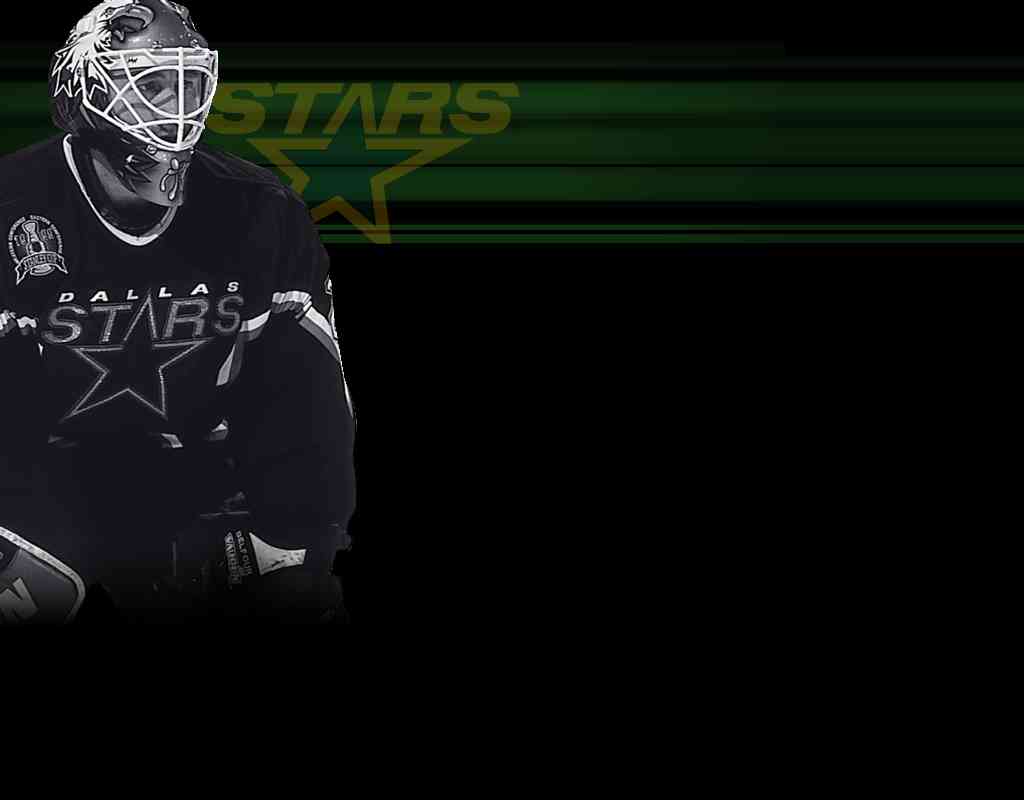
If your job is to stand in the path of a hard rubber disc whistling toward your head at a speed of 130 kilometres an hour, you will naturally be concerned that your armour doesn't let you down. It has taken National Hockey League goalies some three decades of trial and error to figure out what kind of face mask provides a good mix of protection, comfort and clear sightlines. The answer these days is something called the combination mask, a wraparound shell with a built-in cage.
The tale of the modern mask begins back in 1927. That's when Clint Benedict of the Montreal Maroons came out for his first -- and last -- game in a crude leather-and-wire model whose large nosepiece proved to be an impediment to his vision. The next experiment was not until 1959, when pioneering Jacques Plante started wearing a full face mask made of opaque fibreglass and rubber. By the 1970s, all goalies wore masks, mostly form-fitting models made by pouring fibreglass into a plaster cast of the goalie's face. Problematically, their relatively flat, platelike design and snug fit transferred most of the impact of a hard shot directly to the face and offered no protection for the top, sides and back of the head. There was a contemporary alternative -- a helmet with full facial cage -- but it offered relatively poor fit and comfort.
In 1977, goalie Dave Dryden ushered in the modern era when he asked a mask maker to develop something that offered the feel and freedom of movement of a formfitted mask as well as the protection of a cage and helmet. The combination mask was born. Toronto-based mask maker Eddy Schulz, who makes 25 custom and 3,000 stock masks a year, says only a properly fitting model will function well. "If the mask moves around," he says, "you'll get your bell rung."
Thanks to its design, no part of the hard shell of a combination mask directly contacts the face. The shell covering the forehead and top of the head is insulated with with foam padding; the 11-by-13 centimetre steel grill floats about five centimetres in front of the eyes; a chin strap holds the bottom of the shell in place while keeping it away from the chin and mouth. At the rear, a separate backplate is held in place with an elastic harness and converges with the main shell at the top to provide total head protection.
Most mask shells are made of fibreglass, an economical, durable and mouldable substance. Composite materials, such as Kevlar and graphite -- more expensive but strong and light -- are used in the high-impact areas such as the chin and forehead. Those areas are also shaped to deflect pucks away from the face. Sets of corrugated spurs, or ribs, in both add strength and help redirect pucks off to the sides. When Schulz makes custom masks, he bases the shell on a mould of a goalie's face; to achieve a smooth and tough finish, he adds extra layers of an epoxy topcoat; and then, he says, "it's sanded until your fingers bleed."
While Schulz's masks are a bit heavier than some major company models,
he says good balance and fit offset the extra weight. If a mask were not
properly balanced, a goalie would have trouble holding his head up -- even
before he lets in a soft one.
From "How Hockey Works" (Equinox, January/February,1994).
Copyright 1994 by Tim Falconer ([email protected]). Not to be republished
or retransmitted for profit without the consent of the author. All Rights
Reserved.
|
Women's Hockey: Speed, Smarts and Skills --Brains beat brawn in a fleet-footed game that bans the bodycheck. |
|
A freeze-frame study of the power and precision of hockey's split-second
play.